When buyers compare China’s top 10 quality windows, appearance tells only part of the story. A smooth powder-coated frame and precise corner welds look impressive. However, reliable performance depends on documented testing, controlled production, and certifications recognized in the target market. This raises a practical question: what certifications should quality windows have?
NFRC technical expert J. Michael Fischer emphasizes the value of independent comparison: “The NFRC label provides a reliable way to compare the energy performance of windows, doors, and skylights.” That principle matters when reviewing Chinese suppliers. NFRC certification can verify U-factor, solar heat gain coefficient, and visible transmittance. ENERGY STAR recognition may confirm stronger energy performance for specific regions. FGIA or AAMA certification can support air, water, structural, and forced-entry testing.
Other documents may also matter. CCC certification is important for products sold in China. CE marking may apply when products enter certain European markets, although it does not replace every required test. ISO 9001 can indicate a controlled quality-management system. It does not prove that every window performs well.
Look closely.
Ask for current certificates, laboratory reports, product labels, and model-specific test results. Check whether the certificate matches the exact profile, glass package, hardware, and dimensions ordered. A factory may show an impressive certificate for another product line. That is a common weakness.
This guide examines China’s top 10 quality windows through that practical lens. It also recognizes an uncomfortable truth: certifications reduce uncertainty, but they never eliminate installation errors, specification mistakes, or inconsistent after-sales support.
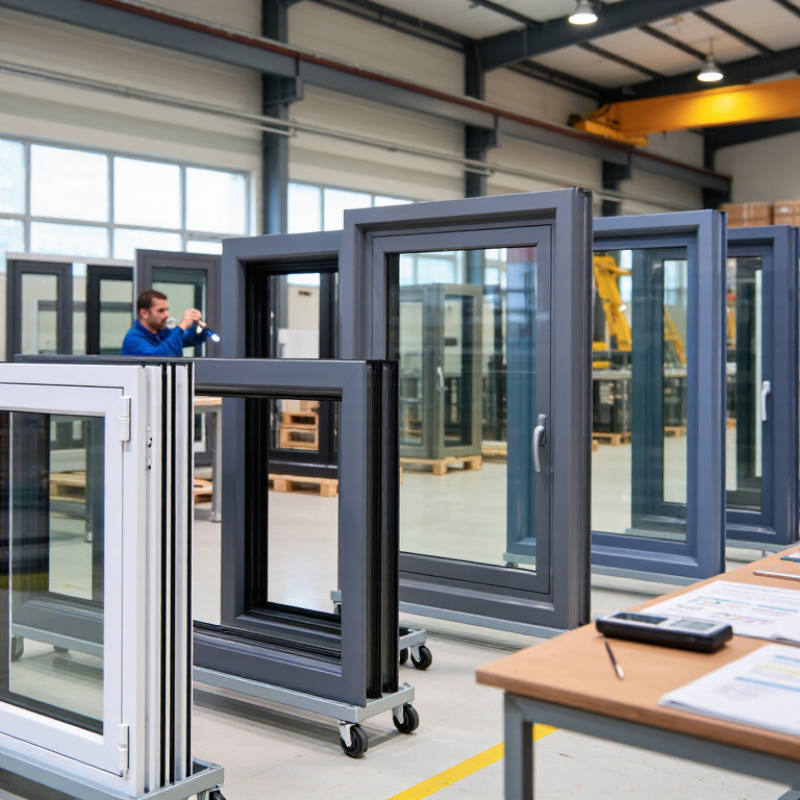
A high-quality window in China begins with measured performance, not a polished catalogue. The IEA’s Buildings 2023 report states that buildings use about 30% of global final energy. Windows can reduce heat loss when their frames, glass, seals, and installation work together. In practical inspections, check the thermal transmittance value, air leakage, water tightness, wind resistance, and visible weld quality. A window should close evenly. The handle should not feel loose. Small defects often reveal larger production problems.
Chinese buyers should request test reports based on GB/T 8478-2020 and related performance standards. These documents should identify the exact profile, glass structure, hardware, and test conditions. ISO 9001 certification can indicate controlled production procedures, but it does not prove excellent insulation. Independent laboratory testing matters more. The China Building Energy Consumption Annual Report shows why this focus is important: building operation remains a significant part of national energy use. Still, published figures can vary by calculation method. That limitation deserves attention.
Tips: Ask for the original laboratory report, not only a certificate image. Compare U-values under the same testing conditions. Check whether installation joints use continuous sealing tape. A strong window can perform poorly after careless fitting. Also inspect sample corners, drainage holes, and gasket compression. Certification supports trust, but evidence from repeatable tests supports a better decision.
What Defines a High-Quality Window in China?
The chart compares the main performance dimensions covered by widely used Chinese window standards. GB/T 7106-2019 evaluates air permeability, watertightness and wind pressure resistance. GB/T 8484-2020 covers thermal insulation, while GB/T 8485-2008 covers airborne sound insulation. GB/T 8478-2020 is the general product standard for building doors and windows. Standards are not automatically product certifications, so buyers should request traceable test reports from laboratories accredited by CNAS or recognized under CMA requirements. CCC applicability should be checked according to the specific product category rather than assumed for every window.
China’s leading window manufacturers differ more than online rankings suggest. The strongest ten usually serve distinct needs: one excels in thermal-break aluminium, another in uPVC frames, and another in slim-profile systems. Some focus on coastal corrosion resistance. Others produce lift-and-slide doors for large openings. A few are experienced in passive-house projects, while others offer economical windows for apartments. Several stand out for automated cutting and welding. One specialist is known for acoustic glazing near busy roads. Another performs well with custom colours and textured finishes. The remaining leaders often provide reliable replacement windows and flexible export packaging.
Certifications help separate capability from advertising. Check ISO 9001 for documented factory controls, but do not treat it as proof of window performance. For European projects, request applicable CE documentation under the relevant construction-product requirements. North American buyers should examine NFRC ratings and testing against recognised regional standards.
Ask for laboratory reports from ISO/IEC 17025-accredited facilities. The report should identify the exact frame, glass, spacer, hardware, and dimensions tested. A certification for one series may not cover another.
In practical inspections, small details reveal more. Look for clean welded corners, even gaskets, drainage holes, and protective film without trapped dust. Ask how the supplier handles replacement hardware after five years. That answer matters.
Factory photographs are useful, but witnessed production checks are stronger evidence. I would also compare air leakage, water penetration, wind load, U-value, and sound ratings together. A low price can hide thin reinforcement or weak installation guidance.
My own caution is simple: a polished catalogue never guarantees a quiet, dry room. Performance depends on design, manufacturing, transport, and installation.
For China’s top-quality windows, certification should match the project, climate, and installation method. The U.S. Department of Energy reports that windows may cause 25–30% of residential heating and cooling energy use. That makes thermal performance more important than attractive hardware alone.
Look for an NFRC-style label or an equivalent national test report. It should show U-factor, solar heat gain coefficient, visible transmittance, and air leakage. Lower U-factor usually means better insulation. In hot regions, a lower SHGC can reduce indoor heat. ENERGY STAR data also indicates that certified windows can deliver meaningful energy savings compared with basic products. However, certification alone is not enough. Check whether the test covers the complete window, including glass, frame, seals, and operating hardware. A strong laboratory result can still fail after poor installation.
Tips: Ask for current test reports, not marketing screenshots. Confirm the testing laboratory’s accreditation. Compare values under the same standard. Measure twice.
For larger projects, review performance standards such as AAMA/WDMA/CSA 101/I.S.2/A440 or relevant Chinese GB standards. These documents address air leakage, water resistance, structural performance, and operational durability. The National Fenestration Rating Council emphasizes consistent rating methods, which helps buyers compare products fairly. Still, field conditions can expose weaknesses. Uneven openings, missing drainage paths, and weak sealant often matter more than a perfect brochure. A careful installer should document the opening, fixing points, and final water test.
When comparing top-quality windows, start with measured performance, not appearance. The U.S. Department of Energy reports that windows can cause 25–30% of residential heating and cooling energy use. That makes U-factor and air leakage important. Lower U-factor usually means better insulation. Lower air leakage means fewer drafts. Check the NFRC label, which independently reports U-factor, Solar Heat Gain Coefficient, visible transmittance, and condensation resistance.
Climate changes the decision. A low SHGC can reduce summer heat in warm regions, while higher solar gain may help colder homes. ENERGY STAR criteria also vary by climate zone, so one “best” specification does not fit every project. Ask for the whole-window rating, not only the center-glass value. Frames matter too. Thermally improved vinyl, fiberglass, and insulated metal systems can perform differently at corners and meeting rails. Small gaps matter.
Warranty language needs the same attention. Compare coverage for glass seal failure, frame damage, hardware, labor, and installation. Confirm whether the warranty transfers when the property is sold. A long glass warranty may exclude labor, shipping, or damage caused by poor drainage. That is easy to miss. NFRC ratings support useful comparisons, but they do not guarantee perfect installation. Review drainage paths, shims, flashing, and perimeter sealant on site. Performance often depends on details hidden behind the trim. My cautious view: certification narrows risk, but it does not replace inspection, climate-specific calculations, or clear written terms.
Choosing a certified Chinese window supplier requires more than checking a certificate logo. Start with the destination market and project type. Required standards may differ for homes, high-rise buildings, coastal areas, or historic properties.
Ask the supplier for complete documents, not cropped screenshots. Check the certificate number, issuing body, product model, testing date, and covered factory address. Useful evidence may include management certification, product safety testing, energy-performance reports, and local compliance documents. The certificate must match the actual window system, glass specification, hardware, and production site.
Request independent test reports for air leakage, water resistance, wind pressure, thermal insulation, and sound reduction. Compare these results with your project requirements. A factory audit can reveal details that paperwork misses, such as poor sealing, mixed hardware, or inconsistent inspection records. Ask for recent production photos and a sample before placing a large order.
Supplier communication also matters. A professional team should explain limits clearly, including lead times, tolerances, replacement procedures, and warranty conditions. Be careful with unusually low prices. They may reflect thinner profiles or missing tests. This is where many buyers misjudge quality. I would also recheck every document before payment, because a valid certificate may cover only one product series, not the entire quotation.
Compare thermal insulation, air leakage, water resistance, wind strength, sound reduction, and installation support. Do not compare price alone. A low quote may hide thin reinforcement or weak seals.
Request current reports for the complete window system. They should cover the frame, glass, spacer, seals, hardware, and tested dimensions. Check ISO 9001 for factory process controls. It does not prove excellent window performance. Laboratory reports should come from ISO/IEC 17025-accredited facilities.
Check the certificate number, issuing body, testing date, product model, and factory address. The document must match the quoted system. A certificate for one series may not cover another.
Review the U-factor, solar heat gain coefficient, visible transmittance, and air leakage rating. A lower U-factor usually indicates better insulation. In hot climates, a lower solar heat gain coefficient can reduce indoor heat. Measure twice.
Inspect welded corners, gaskets, drainage holes, protective film, and hardware storage. Look for trapped dust under the film. Ask how replacement hardware will be supplied after five years. That answer matters.
Poor installation can ruin a well-tested window. Uneven openings, missing drainage paths, and weak sealant create practical failures. The installer should record fixing points and perform a final water test. A perfect report cannot repair a bad opening.
Be cautious when a supplier sends cropped screenshots instead of complete documents. Ask for recent production photos, a physical sample, factory records, and independent testing. Unclear answers about tolerances, lead times, or warranties deserve attention. I may still miss something.
Confirm the exact frame, glass, hardware, finish, packaging, delivery schedule, and replacement process. Ask whether the factory can maintain consistent inspection records. Review every document again before payment. Small details become expensive later.
Choosing high-quality windows from China requires more than comparing appearance and price. A reliable window should combine strong materials, accurate manufacturing, effective sealing, thermal insulation, sound reduction, weather resistance, and consistent quality control. The article explains how to evaluate the top ten categories of Chinese window suppliers by examining their technical strengths, production capabilities, customization options, and after-sales support, without relying solely on marketing claims.
A key part of the selection process is understanding what certifications should quality windows have. Buyers should review relevant product-testing reports, material certifications, energy-performance data, safety standards, and factory quality-management credentials applicable to the destination market. It is also important to compare frame materials, glass configurations, hardware durability, air and water resistance, warranty coverage, replacement policies, and installation support. By requesting clear documentation, verified samples, detailed specifications, and transparent warranty terms, purchasers can identify a certified Chinese window supplier that offers dependable performance, suitable compliance, and long-term value.

Wright Windows